How to Turn WhatsApp Conversations into Sales is one of the most effective strategies businesses can use to increase conversions and build stronger customer relationships. With WhatsApp’s high open rates and real-time communication, brands can engage prospects instantly and guide them toward making a purchase.
However, simply replying to messages isn’t enough. The businesses achieving the highest conversion rates use WhatsApp strategically—combining automation, personalization, timely follow-ups, and product catalogs to create a seamless buying journey.
In this guide, you’ll learn how to turn everyday WhatsApp conversations into sales with practical strategies that help generate more leads, improve customer engagement, and increase revenue.
Why Turning WhatsApp Conversations into Sales Matters
Customers today expect instant communication. Long email response times and complicated contact forms often result in lost opportunities. WhatsApp removes these barriers by providing fast, direct, and personalized communication.
Key Benefits
- Over 2 billion active users worldwide
- High message open and response rates
- Real-time customer conversations
- Supports images, videos, PDFs, catalogs, and payment links
- Builds trust through personalized messaging
- Perfect for lead nurturing and customer support
Businesses that actively engage customers on WhatsApp often experience faster decision-making and higher conversion rates.
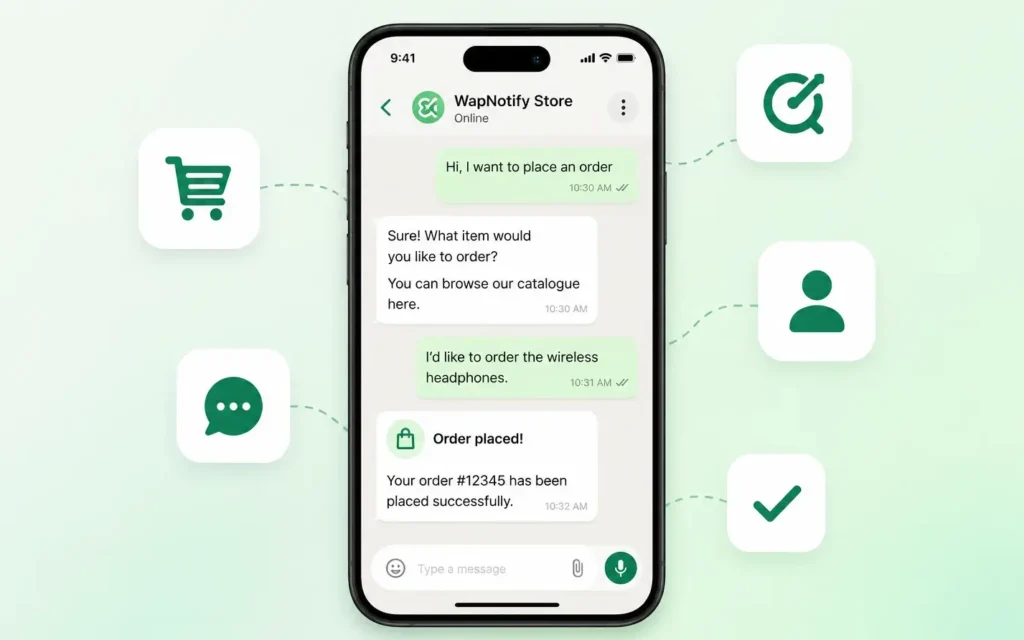
1. Respond Quickly to Every Customer
Speed is one of the biggest factors in converting leads.
When customers send a message, they usually expect a reply within minutes. Delayed responses increase the likelihood that they’ll choose a competitor.
Best Practices to Turn WhatsApp Conversations into Sales
- Enable instant welcome messages
- Use away messages outside business hours
- Assign chats to available team members
- Answer inquiries within five minutes whenever possible
Quick responses show professionalism and keep customers engaged.
2. Personalize Every Conversation
Generic replies don’t build trust.
Use customer information such as:
- Name
- Previous purchases
- Browsing history
- Interests
- Location
- Past conversations
Example:
❌ Hello.
✅ Hi Rahul! Thanks for reaching out again. I noticed you’re interested in our Business Plan. I’d be happy to help you choose the best option.
Personalized conversations significantly improve customer satisfaction and conversion rates.
3. Understand Customer Needs Before Selling
Don’t immediately send pricing.
Instead, ask qualifying questions.
Examples:
- What product are you looking for?
- What’s your biggest challenge?
- Are you purchasing for personal use or business?
- What’s your monthly order volume?
- Do you need support with setup?
Listening first helps you recommend the right solution.
4. Share Product Images, Videos & Catalogs
People buy visually.
Instead of sending long text messages, share:
- Product photos
- Demo videos
- Brochures
- Case studies
- Customer testimonials
- WhatsApp product catalogs
Rich media helps customers make purchasing decisions faster.
5. Use WhatsApp Automation
Automation helps businesses respond faster while reducing manual work.
Automate:
- Welcome messages
- Frequently asked questions
- Order confirmations
- Shipping updates
- Appointment reminders
- Payment reminders
- Follow-up sequences
Automation ensures every customer receives immediate attention.
6. Recover Abandoned Carts
Many customers leave without completing checkout.
Recover them using automated WhatsApp reminders.
Example:
Hi Sarah 👋
You left some great products in your cart. Complete your purchase today and enjoy free shipping!
These reminders often recover lost revenue.
7. Use Broadcast Campaigns
Broadcast campaigns allow businesses to send personalized promotional messages to multiple customers simultaneously.
Perfect for:
- Festival offers
- Flash sales
- New arrivals
- Price drops
- Restocked products
- Seasonal promotions
Unlike group chats, customers receive private messages.
8. Build Trust with Reviews and Testimonials
Social proof increases buying confidence.
Share:
- Customer reviews
- Star ratings
- Success stories
- Before-and-after results
- Video testimonials
People trust recommendations from real customers more than advertisements.
9. Follow Up Consistently
Many customers don’t purchase during the first conversation.
Send value-driven follow-ups such as:
- Product updates
- Helpful guides
- Limited-time discounts
- Frequently asked questions
- Product comparisons
Following up demonstrates genuine interest rather than aggressive selling.
10. Integrate WhatsApp with Your CRM
CRM integration allows businesses to:
- Track customer history
- Manage leads
- Assign chats
- Schedule reminders
- Measure conversion rates
This creates a smoother sales process and improves customer experience.
11. Analyze Performance
Measure key metrics such as:
- Response time
- Chat volume
- Conversion rate
- Revenue generated
- Campaign performance
- Customer satisfaction
- Agent productivity
Data-driven decisions help optimize future campaigns.
Mistakes That Prevent WhatsApp Conversations from Becoming Sales
Avoid these mistakes:
- Slow replies
- Generic messages
- Ignoring customer questions
- No follow-up
- Sending excessive promotional messages
- Lack of personalization
- Poor chat management
Correcting these mistakes can significantly improve conversions.