WapNotify Marketing Campaign Examples: What Actually Works Across Industries, Broadcasts, and E-commerce
Most “WhatsApp marketing tips” content stays theoretical. It tells you to segment your audience and personalise your messages, then leaves you to figure out what that actually looks like in a real broadcast. This guide skips the theory. It walks through real WhatsApp marketing campaign examples across the industries. WapNotify serves most often the broadcast and promotional formats that consistently get opened, and the e-commerce campaigns that turn a one-time buyer into a repeat customer.
If you run marketing for any of these areas, you’ll find campaign structures here you can adapt this week, not just ideas to file away.
Why Context Changes Campaign Design
A campaign that performs brilliantly for a clothing brand can fall flat for a healthcare clinic, and not because one team is better at marketing than the other. The channel is the same, but the customer’s relationship with the brand is completely different. A retail customer wants a deal. A healthcare patient wants clarity and trust. A finance customer wants to feel like their money is safe. An online shopper who just abandoned a cart needs a different message entirely than a loyal customer who buys every month. Successful WhatsApp marketing campaigns start from that difference, not from a generic template.
The Common Thread: Timing and Relevance
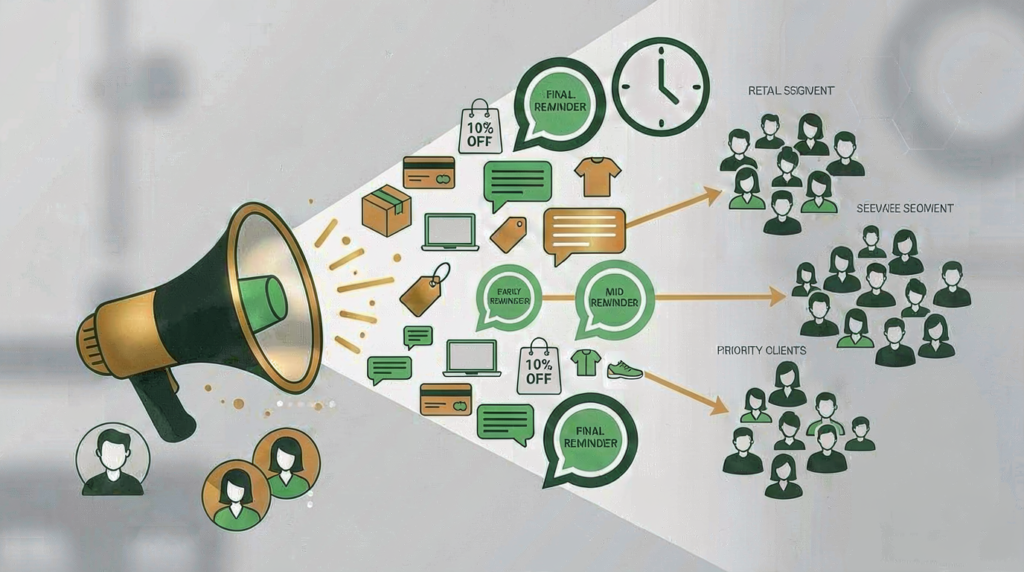
Across every sector and campaign type, the ones that work share two things. They arrive when the customer actually wants information, and they say something specific instead of something generic. A vague “Check out our latest offers!” underperforms almost everywhere. A message that names the product, the price, and the reason to act now performs consistently better, regardless of industry or use case.
Campaign Examples by Industry
Retail and D2C
One pattern that works reliably for retail brands is the restock alert: a short message sent the moment a popular item is back in stock, sent only to customers who previously viewed or asked about that product. Because it’s targeted rather than blasted to the full list, open rates and click rates both run well above average broadcast benchmarks.
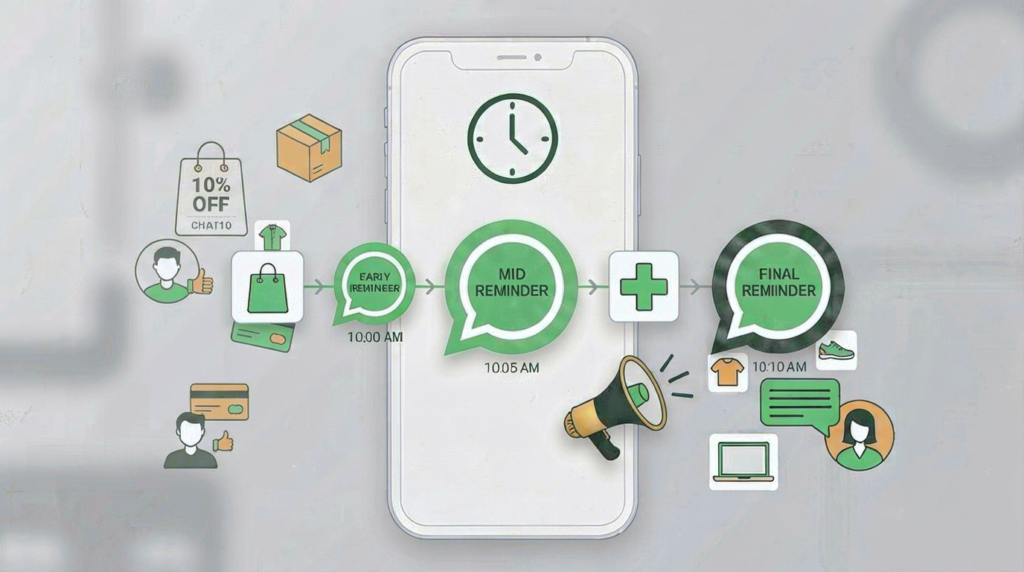
Instead of a single “sale is live” message, some of the strongest retail campaigns use a three-message sequence: an early heads-up, a mid-sale reminder with a specific product highlight, and a final “last few hours” nudge. Each message in the sequence has a different job. The first builds anticipation, the second drives the bulk of conversions, and the third catches the procrastinators.
None of this works if the send times are wrong. A sale reminder sent at 7 am gets buried by the time people check their phones during lunch. This is exactly the kind of variable worth testing rather than guessing. If you’re building out a sequence like this, it’s worth reading through the best time to send WhatsApp marketing messages before locking in your schedule, since the right send window shifts depending on your audience.
Real Estate
Real estate has a longer consideration cycle than retail, so the campaigns that work look different. Instead of pushing for an immediate sale, the goal is usually to keep a lead warm over weeks or months.
Brokers using WapNotify often segment their contact list by the locality and budget range a lead expressed interest in, then send new listing alerts only when something matches. This avoids the common mistake of blasting every listing to every contact, which trains people to ignore the messages entirely. A simple but effective companion pattern is the site visit reminder sequence: an automated reminder 24 hours before a scheduled visit, followed by a short “how did it go” follow-up the next day. This keeps the lead engaged without requiring a salesperson to manually track every appointment.
Healthcare
Healthcare campaigns need a different tone entirely. Anything that feels like aggressive marketing tends to erode trust fast in this category.
Rather than a bare appointment reminder, the clinics that get this right include short prep instructions in the same message, such as “fasting required” or “bring your last prescription”. This turns a routine reminder into something genuinely useful, which is part of why healthcare messages on WhatsApp tend to see very high read rates. For clinics running periodic health camps or screening drives, a segmented broadcast to patients in the relevant age or risk group performs far better than a blanket announcement to the entire patient base.
Education
Education providers running admission cycles use staged reminders similar to the retail sale sequence: an early notice, a mid-cycle nudge with a specific deadline date, and a final reminder as the window closes. The specificity of the deadline date matters more than the design of the message. Automated reminders for fee due dates or missing documents reduce the manual follow-up burden on admin staff considerably, while also reducing late payments simply because the reminder arrives through a channel people actually check.
Finance and B2B
Financial services campaigns work best when they lead with a clear, specific benefit: the exact renewal date, the exact amount due, or the exact rate on offer. Vague “don’t miss out” messaging tends to underperform in this category, likely because financial decisions require more concrete information before someone acts.
For B2B and wholesale sellers, WhatsApp works well as a quotation follow-up channel: a quick nudge two or three days after sending a quote, asking if the buyer has questions. This single follow-up step recovers a meaningful share of quotes that would otherwise go cold.
Broadcast and Promotional Campaign Examples
Every business with a WhatsApp list eventually sends a promotional broadcast. Far fewer get the structure right. The common failure pattern looks the same across industries: a single, generic message sent to the entire list at whatever time the marketing team happened to finish writing it. No sequence, no segmentation, no specific reason to act right now. The examples below fix that by giving every broadcast a clear job, a specific audience, and a reason to act at that particular moment.
Flash Sale Campaigns
Rather than one flash sale announcement, the stronger approach is a short sequence: a heads-up message the evening before, a “live now” message when the sale opens, and a final reminder two to three hours before it ends. Each message has a distinct role, and together they outperform a single broadcast by a wide margin, largely because they catch people at different points in their day.
Specificity in the first line matters more than most teams expect. “Flash Sale This Weekend” gets skimmed past. “Flat 30% Off, Today Only, Ends 9 PM” gets read and acted on.
Product Launch Campaigns
Before a full product launch broadcast, some brands send a short teaser to their most engaged segment, offering early access or a first look. This rewards loyal customers and generates early sales momentum that can be referenced, such as “Already 200+ sold,” in the wider launch message that follows. The launch-day message itself should lead with what’s new and why it matters to that specific customer, not with brand-level enthusiasm. A message built around “here’s what’s different and here’s what it solves for you” consistently beats a message built around “we’re excited to announce.”
Seasonal and Festive Campaigns
A pure greeting message with no offer tends to get acknowledged and ignored. A pure offer message with no seasonal warmth can feel transactional during a festival period. The combination, a short, genuine greeting followed by a relevant offer, tends to perform best, especially for regional festivals where a message in the local language or Hinglish outperforms a purely English version.
Timing Around the Festival Calendar
Sending a festive campaign the day of the festival is often too late, since purchase decisions for gifting or celebration typically happen several days earlier. Most successful seasonal campaigns go out three to five days ahead, with a final reminder closer to the date itself. The same logic applies to end-of-season clearance messages, which work well when they’re framed around urgency created by inventory, not artificial scarcity. “Last stock, sizes limited” tends to read as more credible than “hurry, offer ending soon”, which readers have seen thousands of times before.
Event Promotion Campaigns
For webinars, in-store events, or product demos, a short sequence works better than a single invite: an initial invite, a reminder as the registration deadline approaches, and a final reminder the day of the event with the exact time and joining details repeated. Losing attendees between registration and the actual event is common, and a same-day reminder recovers a noticeable share of no-shows. An often-skipped step is the post-event follow-up: a short message thanking attendees and including a next step, whether that’s a recording link, a special offer, or a booking link, which turns a one-time touchpoint into the start of an ongoing conversation.
Referral and Survey Campaigns
Referral messages that offer a benefit to both the existing customer and the person they refer tend to outperform one-sided incentives. The message itself works best when it’s short and makes sharing effortless, ideally with a pre-written message the customer can forward rather than asking them to write their own. On the feedback side, short, single-question surveys sent via WhatsApp get noticeably higher response rates than long email forms. A simple “How was your recent order, 1 to 5?” with quick-reply buttons collects meaningful data without asking much of the customer’s time.
E-commerce Campaign Examples
For online stores, WhatsApp has quietly become one of the most reliable channels for recovering lost sales and pulling customers back for a second and third purchase. The catch is that most e-commerce brands only use it for one thing: order updates. That’s a missed opportunity, since the campaigns below go well beyond shipping notifications and map directly to where a customer actually is in their journey with the store.
Cart Recovery Campaigns
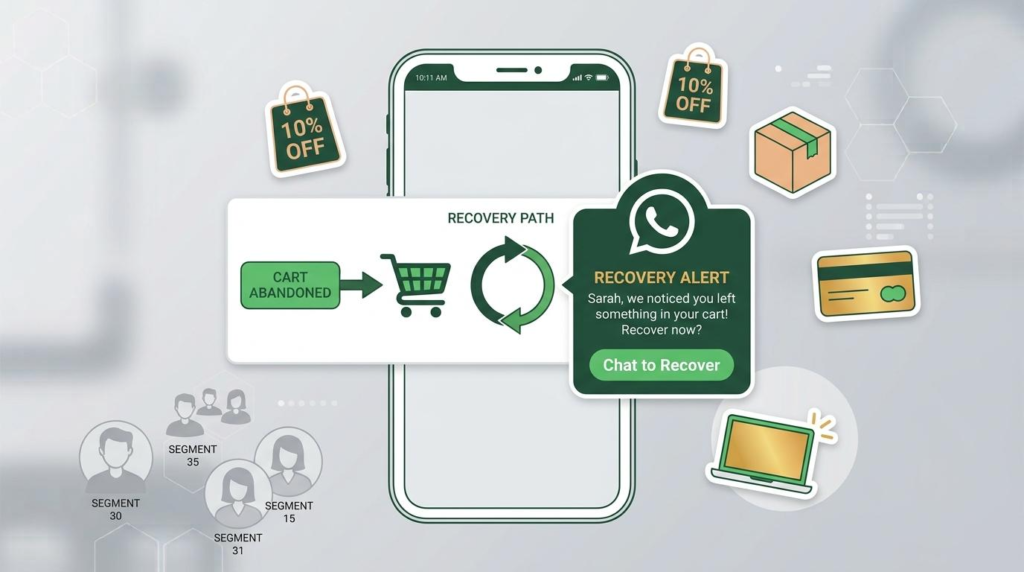
The first cart recovery message should be simple and low-pressure: a reminder of what was left behind, sent within an hour or two of abandonment while intent is still high. No discount needed at this stage for most product categories, since a chunk of abandoned carts convert on a plain reminder alone. If that first reminder doesn’t convert within a day, a second message with a small incentive, such as free shipping or a modest discount, often recovers a further share of carts. The key is starting small, since jumping straight to a large discount trains customers to abandon carts on purpose, expecting a deal to follow.
Cart Recovery for High-Consideration Products
For higher-priced items, a slightly different pattern works better: instead of a discount, the follow-up message addresses a likely objection, like a size guide, a returns policy reminder, or a customer photo. This works because the hesitation isn’t about price; it’s about certainty.
Upsell and Cross-Sell Campaigns
A short message sent shortly after a purchase confirming the order and suggesting a genuinely complementary product tends to perform far better than a random product recommendation sent weeks later. For any product with a predictable usage cycle, a replenishment reminder timed to when the customer is likely running low works remarkably well. A skincare brand reminding a customer around day 25 of a 30-day product, for instance, catches them right before they’d normally reorder anyway.
Win-Back Campaigns
For customers who haven’t purchased in a few months, a short, honest message acknowledging the gap, paired with a reason to come back, tends to outperform a purely discount-led approach. Something as simple as “here’s what’s new since you last shopped with us” can be more effective than another blanket coupon. If that soft message doesn’t land, a second message with a genuinely time-limited offer, such as a 48-hour window, gives the customer a concrete reason to act now rather than filing the message away for later.
Loyalty and Retention Campaigns
Marking a customer’s first purchase anniversary, or a milestone like their fifth order, with a small acknowledgement or reward builds a sense of relationship that a purely transactional store rarely creates. These messages typically see very high read rates simply because they feel personal rather than promotional. Giving repeat or high-value customers early access to a sale or new collection, ahead of the general list, rewards loyalty in a way that’s more meaningful than a generic discount.
Catalogue, Survey, and Automation Campaigns
Sending a short WhatsApp catalogue message featuring a curated set of products, rather than a link to the full store, tends to convert better since it removes the friction of browsing an entire site on a small screen. Beyond a single shipping notification, some brands build a short automated sequence: order confirmed, shipped, out for delivery, and a delivered message with a quick feedback prompt. Each step reduces “where is my order” support queries while keeping the brand present throughout the delivery window, and a one-tap feedback request sent shortly after delivery captures far more responses than an email survey.
What Makes These Campaigns Repeatable
Segmentation Before Anything Else
Every example above depends on segmentation. None of these campaigns would work sent to an entire undifferentiated list. Building this on a platform with the best WhatsApp CRM capabilities, meaning one that lets you tag and filter contacts by behavior, location, or lifecycle stage, is what makes segmentation practical instead of a manual spreadsheet exercise. For e-commerce specifically, this depends on your WhatsApp platform knowing what’s happening in your store, which is where a best CRM with WhatsApp integration matters most, since it lets cart recovery, replenishment, and milestone messages trigger automatically off real customer behavior.
Testing Before Scaling
Even a well-designed campaign structure benefits from testing before it’s rolled out to a full list. Small changes to a message, such as where the deadline is mentioned or how the CTA is phrased, can shift results meaningfully. If you haven’t already, it’s worth running your next WhatsApp marketing campaign through a proper A/B test WhatsApp marketing campaign process before committing to one version at scale. A WhatsApp campaign split testing guide is a useful reference if you’re setting this process up for the first time, since getting the test structure right matters as much as the creative itself.
Templates That Don’t Get Stale
A common mistake is reusing the same message structure for every promotional send until open rates quietly decline. Building out a small library of tested templates and refreshing them periodically keeps your WhatsApp Business marketing campaign performance from plateauing. This is also where reviewing WhatsApp message template testing tips pays off, since WhatsApp Business API templates need to go through approval and having variants ready in advance saves time when you want to test something new.
Sending at Volume Without Losing Personalisation
Running these campaigns at scale requires reliable infrastructure. A capable online bulk WhatsApp sender with proper segmentation means you can reach a large list without sacrificing delivery reliability, and without the messages feeling like a copy-paste blast even when they’re going out to thousands of customers a day.
Using WhatsApp Commerce for In-Chat Purchases
For stores that want to reduce the number of steps between a WhatsApp message and a completed sale, WhatsApp Commerce features let customers browse a catalogue and complete a purchase without leaving the chat. This shortens the path from cart reminder to checkout considerably, which matters most for mobile-first, impulse-driven categories.
Choosing the Right Infrastructure
None of the campaign types above are hard to plan on paper. The difficulty is usually operational: managing templates, keeping delivery rates high, and avoiding the kind of inconsistent sending that gets a number flagged. A dependable WhatsApp Business API partner removes most of that friction, so your team can focus on campaign design instead of troubleshooting delivery.
Common Mistakes to Avoid
- Sending the same message to the entire contact list regardless of relevance or journey stage
- Skipping the reminder sequence and hoping one message does the job
- Using vague CTAs instead of specific dates, amounts, or product names
- Never revisiting send times, even after months of the same schedule underperforming
- Jumping straight to a large discount instead of testing a plain reminder first
- Reusing the same template so often that engagement quietly erodes
- Treating every industry, customer segment, or journey stage the same way
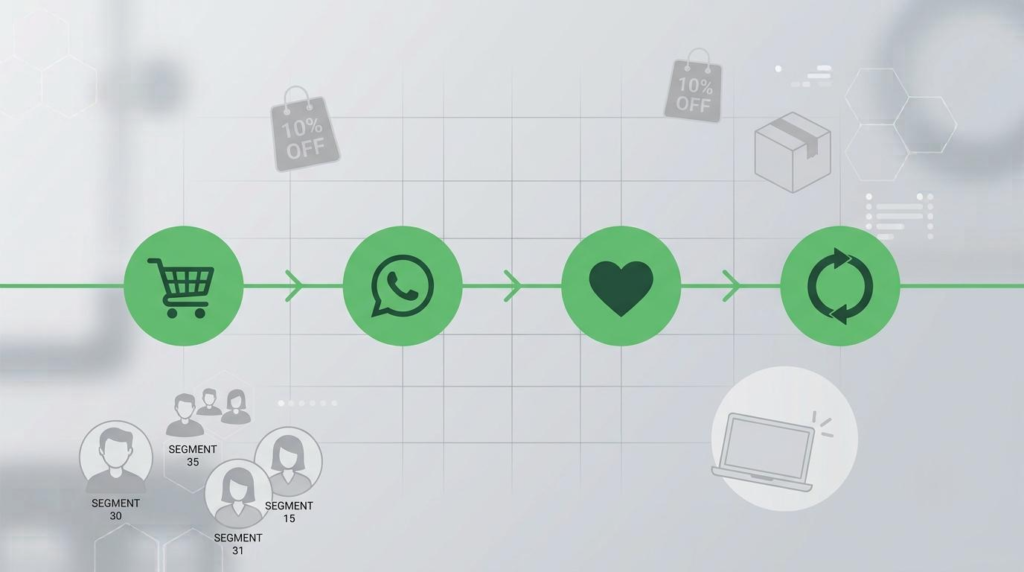
The best WhatsApp marketing campaign examples aren’t complicated. They’re specific, timed well, and built for the actual relationship a customer has with that business, whether that’s a retail shopper looking for a deal, a patient who just wants a clear reminder, or a customer who abandoned a cart an hour ago. Start with one campaign type from your industry or customer journey, run it on a segment of your list, and refine it before rolling it out further. That’s usually a faster path to results than trying to build a perfect, all-encompassing campaign strategy from day one.
Is WapNotify compliant with WhatsApp’s marketing policies?
Yes, WapNotify operates on the official WhatsApp Business API and requires explicit customer opt-in before sending any promotional messages. All marketing templates must be pre-approved by Meta, and every message must include an opt-out option like “Reply STOP to unsubscribe.”
What types of WhatsApp marketing campaigns can I run with WapNotify?
You can run promotional broadcasts (flash sales, new product launches, festival offers), transactional messages (order confirmations, shipping updates), and automated drip campaigns (welcome sequences, abandoned cart recovery, re-engagement flows). WapNotify supports Meta-approved marketing templates with personalisation variables and CTA buttons.
How do I create a WhatsApp marketing campaign in WapNotify?
Log into your WapNotify dashboard, go to Broadcasts or Campaigns, select your segmented contact list, choose a pre-approved marketing template, personalise with variables like {{first_name}} or {{product_name}}, and schedule or send immediately. All campaigns must use Meta-approved templates submitted 24–48 hours in advance.
What are some examples of high-converting WhatsApp messages?
High-converting examples include flash sale alerts (“24-hour sale: 30% off with code FLASH30”), abandoned cart reminders (“You left items behind—complete checkout now”), personalized product recommendations, and limited-time festival offers (“Diwali exclusive: 40% off for 48 hours”). Messages with urgency, clear CTAs, and rich media perform best.