WhatsApp marketing in 2026 isn’t about sending more messages, it’s about sending fewer, better-targeted ones through a properly set up account. Businesses that treat WhatsApp as a real channel, with a tested strategy, a clean contact list, and the right infrastructure behind it, consistently outperform the ones still sending generic broadcasts to their entire list. This guide covers what actually matters for WhatsApp marketing this year: getting your foundation right, choosing strategies that fit your business, testing before you scale, and picking tools that grow with you.
Why WhatsApp Marketing Still Matters in 2026
WhatsApp remains one of the few marketing channels where messages get opened and read within minutes rather than sitting unread in an inbox. That immediacy is exactly why it works so well for order updates, time-sensitive offers, and customer service, but it’s also why a badly executed campaign does more damage here than on a lower-attention channel like email. A single irrelevant broadcast can cost you an opt-out permanently, which makes getting the fundamentals right more important on WhatsApp than almost anywhere else in your marketing mix.
What’s Changed Heading Into 2026
The businesses seeing the strongest results this year share a few habits: they’ve moved past basic broadcasting into segmented, tested campaigns, they’ve connected WhatsApp to their CRM or store data instead of running it as a standalone tool, and they treat automation as a way to be more relevant, not just faster to respond. None of this requires a massive budget. It requires a proper setup and a willingness to test before scaling.
Getting Your Foundation Right Before You Market
Choosing Between the App and the API
Before any marketing strategy makes sense, your account needs to actually support it. The free WhatsApp Business App works for a solo operator answering a handful of chats a day, but it can’t support segmented broadcasts, team-based replies, or automation triggered by real business events. If you’re planning any kind of ongoing campaign activity, you’ll likely need the WhatsApp Business API instead, along with a proper WhatsApp Business API partner to handle setup and template approval. Our full whatsapp business api setup guide walks through the requirements and process in detail if you’re starting from scratch.
Building a Complete, Trustworthy Profile
A vague or unfinished business profile undercuts every campaign you send afterward, since customers judge your credibility from your profile before they ever read your message. Knowing how to create whatsapp business profile content that’s specific, complete with hours, description, and logo, and consistent across your presence is a small task that pays off in higher trust for every broadcast that follows.
Understanding Verification
Getting your account through the whatsapp business verification process matters more this year than it used to, since verified, official business accounts are increasingly what customers expect from brands actually investing in the channel. If you’re weighing your options here, it’s also worth understanding the whatsapp business app vs personal account distinction early, since starting on the wrong setup means redoing foundational work later.
Core WhatsApp Marketing Strategies for 2026
Segmented Broadcast Campaigns
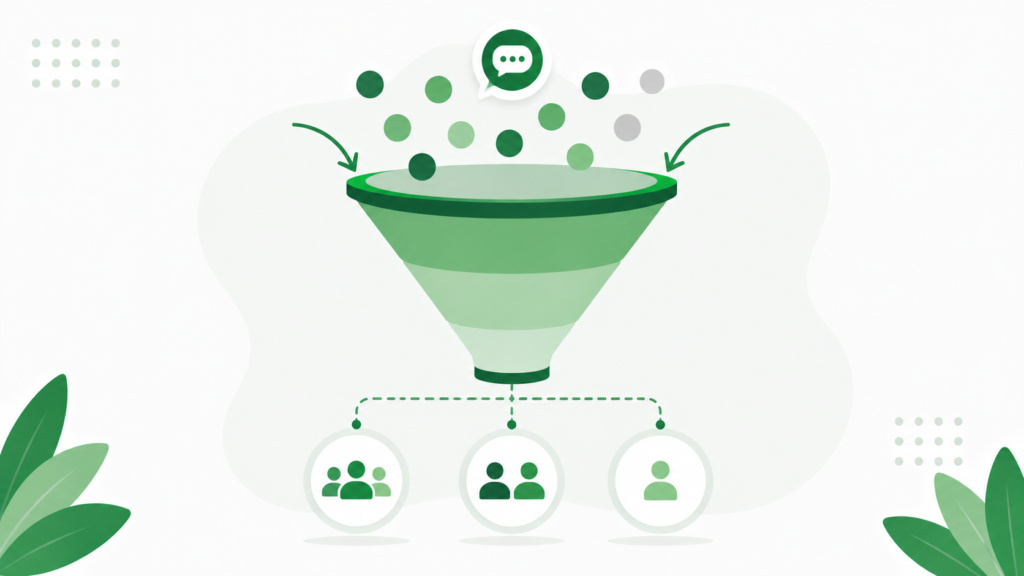
Generic, list-wide broadcasts are the single biggest reason WhatsApp campaigns underperform. Segmenting by purchase history, engagement level, or customer lifecycle stage and sending a tailored message to each group consistently outperforms a single message sent to everyone, often by a wide margin. This is the foundation of any real whatsapp business marketing campaign strategy, and it depends entirely on having clean, tagged contact data to work from.
WhatsApp Commerce and Catalog-Driven Selling
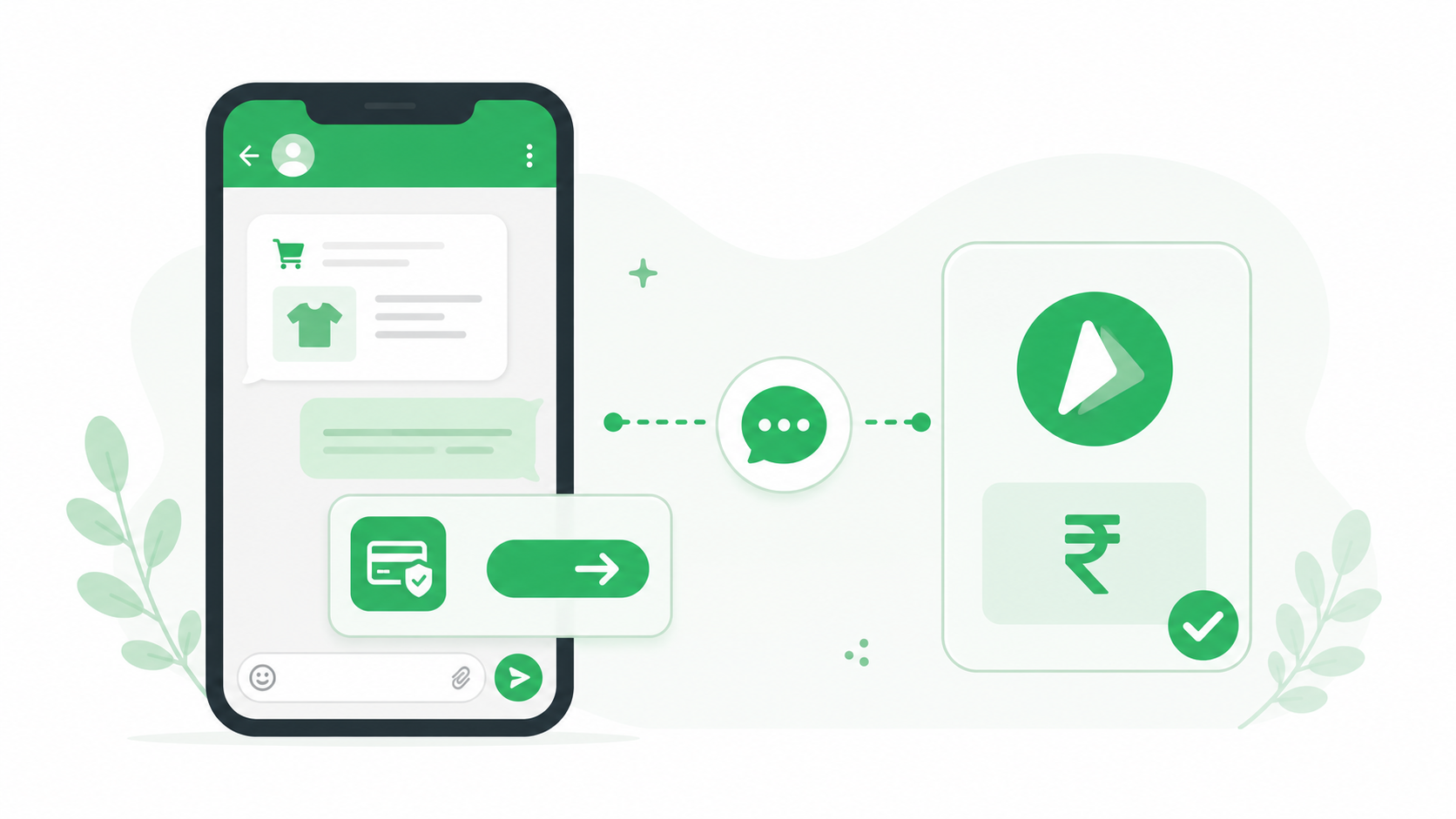
For online stores, WhatsApp Commerce has matured into a genuine sales channel rather than just a messaging add-on. Customers can browse a catalog, ask questions, and complete a purchase without ever leaving the chat, which shortens the path from interest to sale considerably compared to redirecting customers to a separate website.
Automation That Feels Personal
The most effective automation in 2026 doesn’t feel like automation. Order confirmations, restock alerts, and appointment reminders that trigger off real customer actions, rather than a blanket schedule, read as genuinely useful rather than promotional. This is where pairing your messaging with a proper CRM layer makes the biggest difference, since automation is only as relevant as the data behind it.
Bulk Sending Done Properly
Running promotions at scale requires infrastructure built for it. An online bulk WhatsApp sender with real segmentation lets you reach thousands of contacts without every message feeling like a copy-paste blast, and without the delivery and quality-rating risks that come from sending through unofficial tools.
Testing and Optimizing Every Campaign
Why Testing Matters More Than Guessing
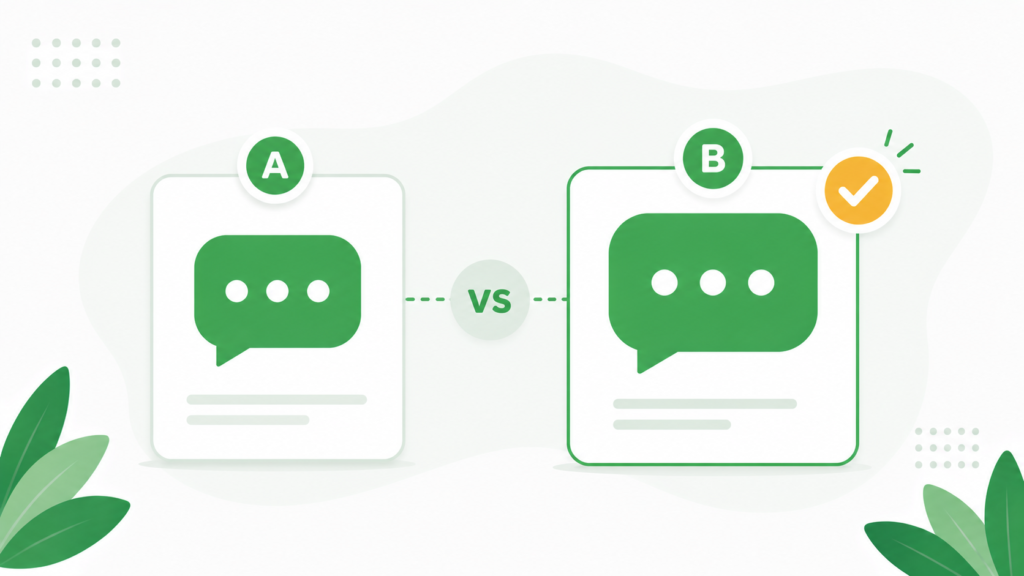
Two nearly identical messages can produce very different results depending on wording, timing, or CTA phrasing, and there’s no reliable way to know which will perform better without testing. Running a proper A/B test WhatsApp marketing campaign process on a smaller segment before a full send protects your list health and steadily improves results over time.
Finding Your Best Send Times
Send timing varies meaningfully by audience and industry, and assuming a generic benchmark applies to your specific customers is one of the more common mistakes businesses make. Testing best time to send whatsapp marketing messages against your own list, rather than copying what worked for another brand, tends to produce more reliable, repeatable results.
Building a Testing Habit, Not a One-Off Test
A single test tells you something about one campaign. A consistent whatsapp campaign split testing guide approach, applied to every major send, builds a growing playbook of what actually works for your audience specifically. The same discipline applies to your template library. Regularly revisiting whatsapp message template testing tips keeps your approved templates from going stale and quietly losing engagement over time.
Choosing the Right Tools for 2026
Why a WhatsApp CRM Changes Everything
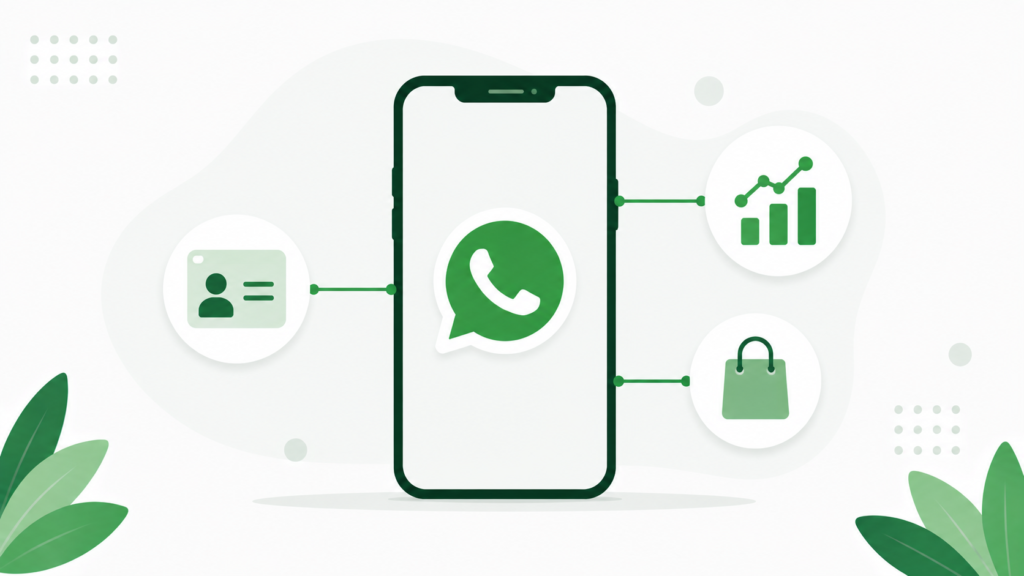
Running WhatsApp marketing without a CRM behind it means manually tracking segments, campaign performance, and customer history across spreadsheets, which becomes unworkable past a certain point. A Best WhatsApp CRM setup keeps contacts, conversations, and campaign data in one place, which is what makes segmentation and automation genuinely practical rather than theoretical.
What to Look For in a Platform
Not every provider offers the same depth. Look for a best crm for whatsapp option that supports native segmentation, template management, and multi-agent access, and prioritize a best crm with whatsapp integration that connects to your existing store or business systems rather than operating as an isolated messaging tool.
Learning From What Already Works
Studying Proven Campaign Structures
Rather than building your 2026 campaign calendar from scratch, reviewing successful whatsapp marketing campaigns and real whatsapp promotional campaign examples gives you tested structures to adapt rather than guess at. Our full library of Marketing Campaign Examples breaks these down by industry and campaign type, alongside practical WhatsApp marketing tips you can apply directly to your next send.
Common WhatsApp Marketing Mistakes in 2026
- Sending list-wide broadcasts with no segmentation, regardless of campaign size
- Skipping tests and guessing at send times or message framing
- Running WhatsApp as a disconnected tool instead of linking it to CRM or store data
- Letting message templates go stale instead of refreshing and testing them regularly
- Prioritizing list size over list quality, which quietly hurts engagement and delivery over time
Where WhatsApp Marketing Is Heading
Expect the gap between businesses using WhatsApp well and those using it poorly to keep widening this year. The tools for segmentation, automation, and testing are more accessible than ever, which means the businesses that skip them stand out for the wrong reasons. Getting the fundamentals right, a proper setup, clean data, and a genuine testing habit, matters more than chasing every new feature the moment it launches.
Conclusion
A strong WhatsApp marketing strategy in 2026 starts with the boring parts: a properly set up account, a clean and segmented contact list, and a habit of testing before scaling. Layer in the right tools, a CRM that connects your data, an API partner that handles the technical side, and infrastructure built for bulk sending done properly, and the more advanced tactics, commerce integration, automation, personalization, become genuinely achievable instead of aspirational. Start with your foundation, build one tested campaign at a time, and let results guide what you scale next.
Frequently Asked Questions
What is the best WhatsApp marketing strategy for 2026?
The most effective strategy combines a properly verified business account, a segmented and opted-in contact list, and a consistent habit of testing campaigns before sending to your full audience. Businesses that connect WhatsApp to a CRM and treat automation as a way to add relevance, not just speed, see the strongest results.
Do I need WhatsApp Business API for marketing, or is the app enough?
The free WhatsApp Business App works for basic customer replies and a small catalog, but it can’t support segmented broadcasts, team access, or event-based automation. If marketing campaigns are part of your plan, WhatsApp Business API is generally necessary once you move beyond occasional messaging.
How often should I test my WhatsApp marketing campaigns?
Testing should happen before every major send, not just occasionally, since even small changes to send time or message wording can shift results meaningfully. Building this into a regular habit, rather than treating it as a one-time exercise, is what compounds into consistently better campaign performance.
What’s the biggest mistake businesses make with WhatsApp marketing?
The most common mistake is sending the same generic broadcast to an entire contact list without any segmentation. This approach tends to produce weaker engagement and a higher opt-out rate compared to smaller, targeted sends built around a specific customer segment or journey stage.
Is WhatsApp marketing still effective in 2026?
Yes, WhatsApp remains one of the highest-engagement marketing channels available, particularly for time-sensitive updates and order-related messaging. Its effectiveness increasingly depends on execution, meaning segmentation, testing, and proper setup matter more now than simply having a presence on the channel.